Along the shoreline of Boka Bay, many of the churches share the same orientation—they face the water.
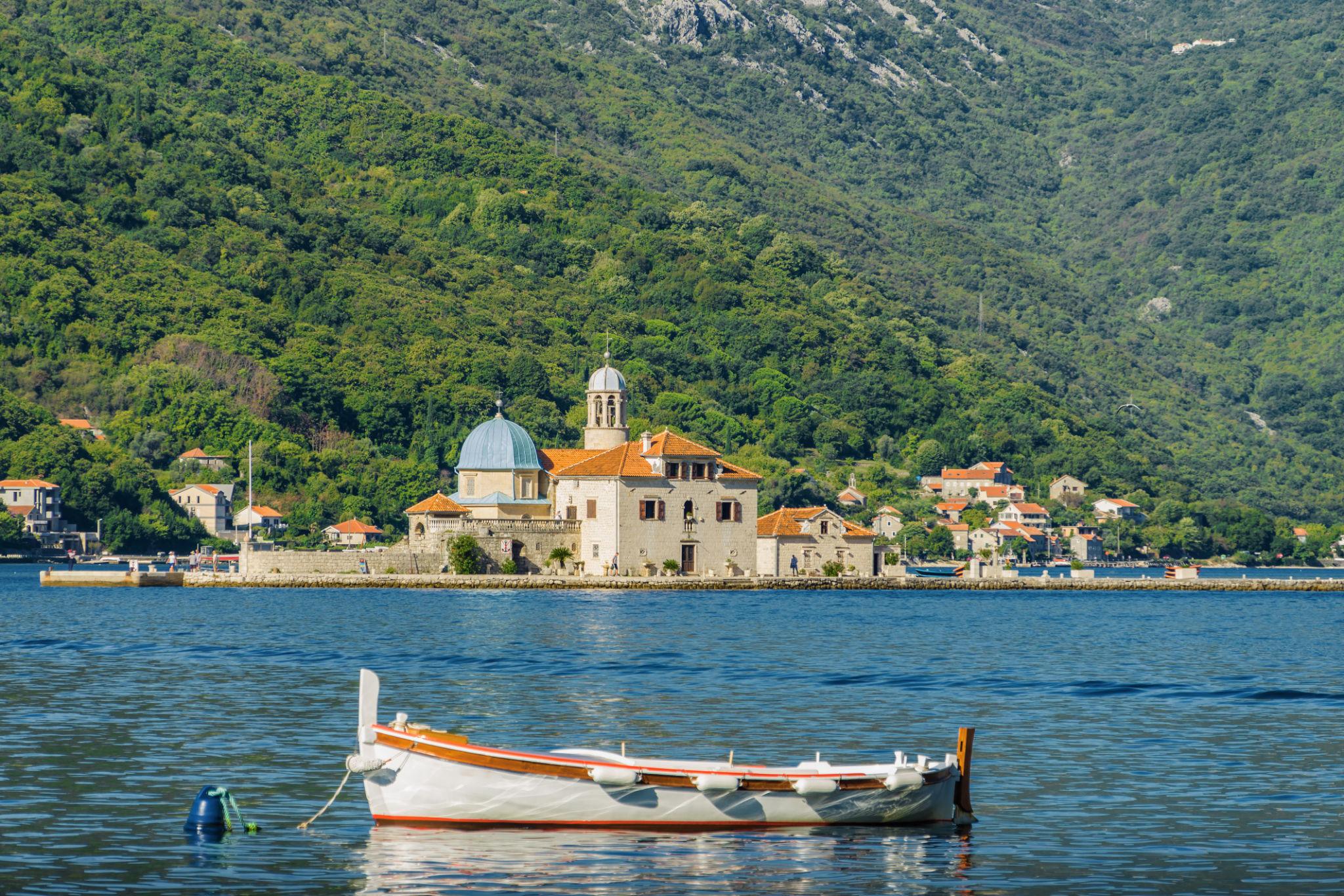
Some stand directly at the edge, with only a narrow line of stone between their walls and the sea. Others are slightly elevated, looking out across the bay from a quiet distance. In both cases, their position is deliberate.
For centuries, the sea represented both livelihood and uncertainty. It connected communities, but also exposed them to risk. Placing churches along the coast created a visible presence—something constant, watching over movement on the water.
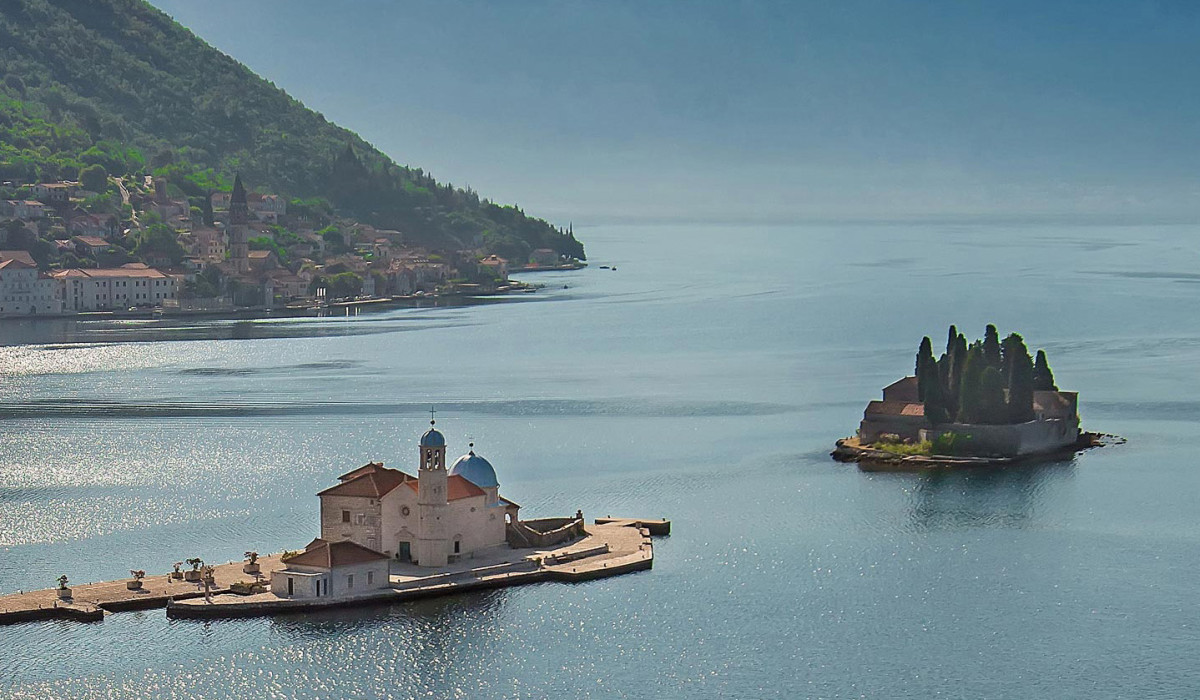
One of the most well-known examples is Our Lady of the Rocks, built on a man-made island in the middle of the bay. Its location reflects a long tradition of linking faith with the sea, not separated from it, but placed directly within it.
From the boat, these structures appear quietly integrated into the landscape. They do not dominate the view, but become part of it—stone, water, and light forming a single composition.
Passing by, they offer a sense of continuity. Not as landmarks to be visited, but as enduring points of reference in a place where much else is shaped by change.